Zadanie 7
Wzorowane na: Chemistry SL Paper 1, May 2022, TZ2, pytanie 7. Treść, dane i kontekst są zmienione; sprawdzane umiejętności, format i punktacja jak w oryginale.
Darmowe konto pozwoli wrócić do niego później.
Polecenie
Elements X, Y and Z are in the same period of the periodic table. The relative sizes of their atoms are shown below.
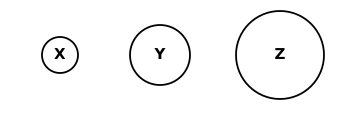
Which row shows the correct general trends?
A. Ionization energy: Z < Y < X; electronegativity: Z < Y < X; acidity of oxide, least to most acidic: Z < Y < X
B. Ionization energy: X < Y < Z; electronegativity: Z < Y < X; acidity of oxide, least to most acidic: Z < Y < X
C. Ionization energy: Z < Y < X; electronegativity: Z < Y < X; acidity of oxide, least to most acidic: X < Y < Z
D. Ionization energy: X < Y < Z; electronegativity: X < Y < Z; acidity of oxide, least to most acidic: X < Y < Z
Sprawdź rozwiązanieUkryj rozwiązanieKlucz i punktacja
Odpowiedź z klucza
A ✔
«atomic radius decreases across a period as the nuclear charge increases, so the smallest atom, X, has the highest atomic number and Z the lowest. Ionization energy and electronegativity both increase across a period, so Z < Y < X. Oxides change from basic through amphoteric to acidic across a period, so the acidity of the oxides also increases from Z to X»
Schemat punktowania
One mark for the correct option.