Zadanie 1b, Paper 2, listopad 2025, TZ1, Biologia IB HL
Wzorowane na: Biology HL Paper 2, November 2025, TZ1, pytanie 1(b). Treść, dane i kontekst są zmienione; sprawdzane umiejętności, format i punktacja jak w oryginale.
Darmowe konto pozwoli wrócić do niego później.
Zadanie
Wspólne informacje do wiązki zadań
A constructed study concerns grey seals, marine mammals that eat fish. A larger prey catch per unit effort (CPUE) indicates easier food acquisition.
| Season | Water temperature / °C | CPUE |
|---|---|---|
| Winter | 8.4 | 96 |
| Summer | 15.9 | 432 |
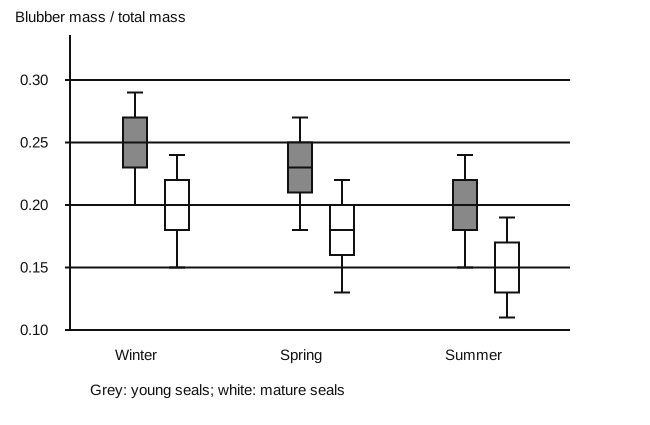
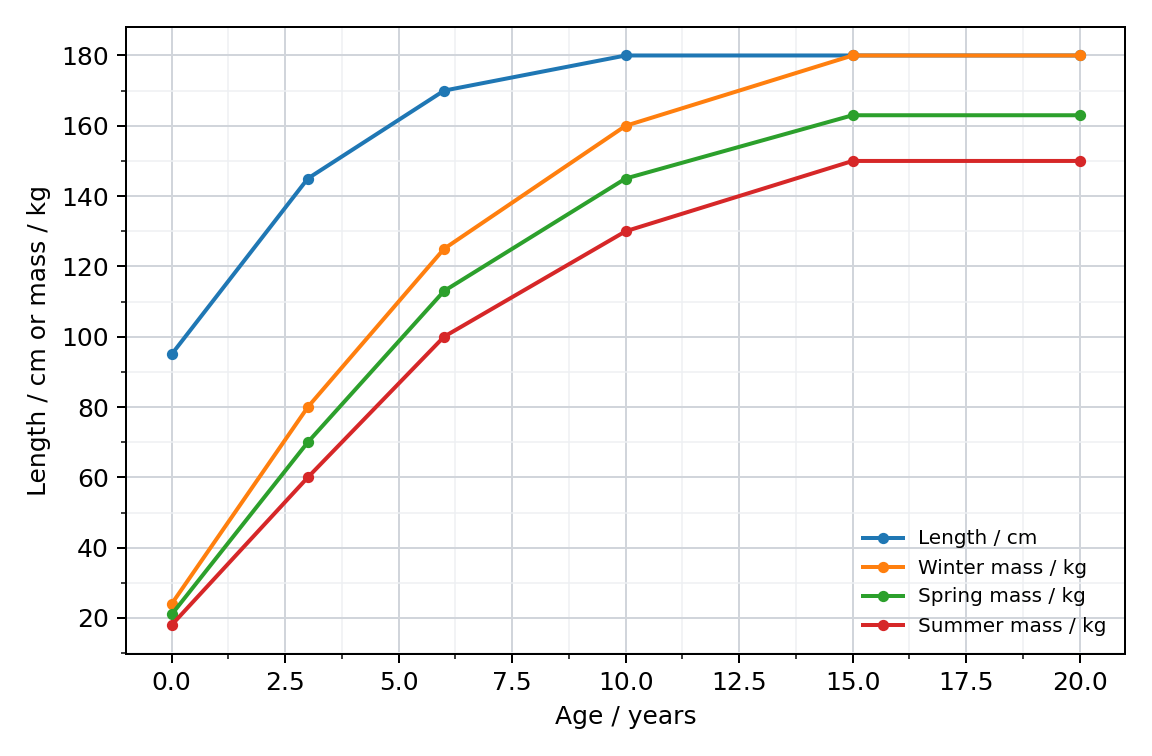
Blubber is an insulating layer containing fat cells and connective tissue. Box plots summarize its fraction of body mass by age class. A second graph gives model age trends in length and seasonal mass.
 Powiększ
 Powiększ
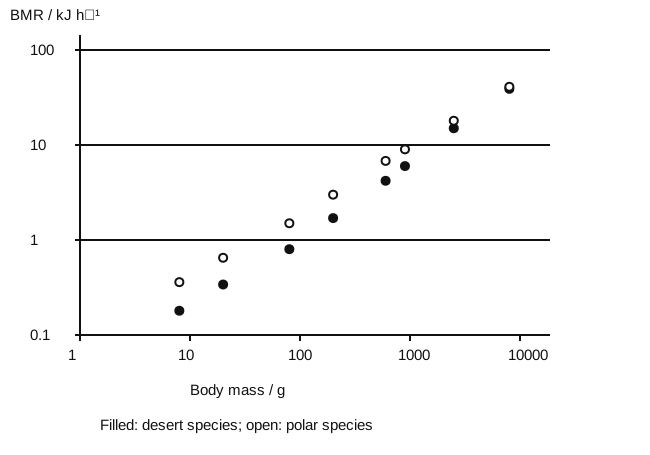
A separate model dataset compares mammalian basal metabolic rate (BMR), the energy used per hour while awake at rest in a thermally comfortable setting. Oxygen consumption, carbon-dioxide production or heat output can be used to estimate it. Both axes of the scatter plot are logarithmic.
 Powiększ
Polecenie
(i) Distinguish the blubber proportions of the two age classes across the seasons.
(ii) Suggest reasons for this difference.
Korepetytor AI
Nie wiesz, jak ruszyć? Korepetytor zna to zadanie i poprowadzi Cię krok po kroku, bez gotowca.
3 rozmowy · bez karty · Zaloguj się
Sprawdź się
Odpowiedz i oceń, jak poszło. Klucz odsłoń dopiero, gdy masz swoją odpowiedź.
Jak poszło Ci z tym zadaniem?
Wybierz ocenę: zapamięta ją ta przeglądarka, a z darmowym kontem zobaczysz ją na każdym urządzeniu.
Pokaż rozwiązanieUkryj rozwiązanieKlucz i punktacja
Odpowiedź z klucza
(i) Young seals have higher median proportions in every season. ✔
(ii) Young seals are smaller OR have a higher surface-area-to-volume ratio. ✔
They lose heat more readily OR need greater insulation. ✔
Blubber also contributes buoyancy or streamlining. ✔
Young animals may still obtain a fat-rich milk diet. ✔
Schemat punktowania
Part(i):1, requiring all seasons. Part(ii):any2, maximum2. Total3. Accept converse comparisons for adults; energy-reserve needs alone do not explain the tested age difference.