Zadanie 2a, Paper 1B, maj 2025, TZ2, Biologia IB HL
Wzorowane na: Biology HL Paper 1B, May 2025, TZ2, pytanie 2(a). Treść, dane i kontekst są zmienione; sprawdzane umiejętności, format i punktacja jak w oryginale.
Darmowe konto pozwoli wrócić do niego później.
Zadanie
Wspólne informacje do wiązki zadań
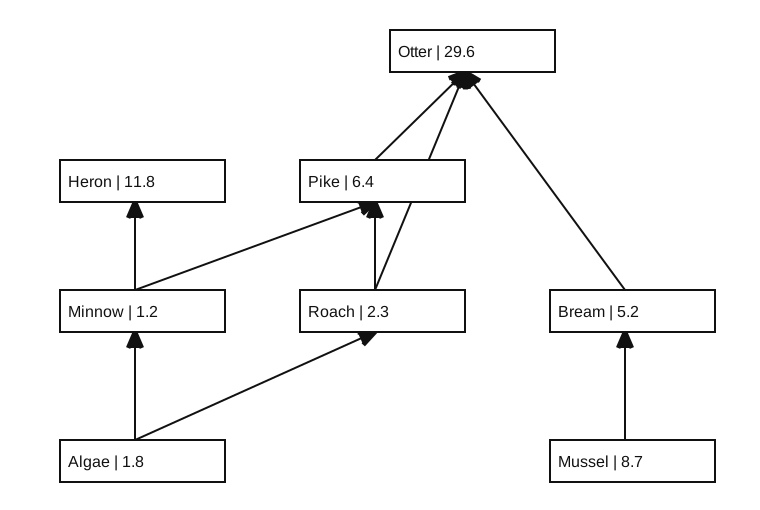
An illustrative wetland survey records DDT residues in body lipids. Values in the food web are mg DDT per kg lipid. Arrows point from food to consumer. Historical contamination reaches algae from the water and mussels from contaminated suspended material; these entry routes are not feeding links.
 Powiększ
Polecenie
Justify why the otter has a higher DDT concentration than either the heron or the pike.
Korepetytor AI
Nie wiesz, jak ruszyć? Korepetytor zna to zadanie i poprowadzi Cię krok po kroku, bez gotowca.
3 rozmowy · bez karty · Zaloguj się
Sprawdź się
Odpowiedz i oceń, jak poszło. Klucz odsłoń dopiero, gdy masz swoją odpowiedź.
Jak poszło Ci z tym zadaniem?
Wybierz ocenę: zapamięta ją ta przeglądarka, a z darmowym kontem zobaczysz ją na każdym urządzeniu.
Pokaż rozwiązanieUkryj rozwiązanieKlucz i punktacja
Odpowiedź z klucza
The otter receives contaminated food from three prey species in this web. ✔
It can occupy a higher trophic level, eating the pike as a tertiary consumer while the pike and heron can be secondary consumers. ✔
DDT persists and builds up in fatty tissues because it is not readily broken down or eliminated. ✔
Biomagnification increases DDT concentration across successive trophic levels. ✔
Schemat punktowania
Award any 2 points, maximum 2. Distinguish accumulation within tissues from concentration increase across trophic levels. Persistence/non-breakdown OR accumulation in fatty tissue is sufficient for the tissue-accumulation point; do not require both.