Zadanie 3b, Paper 1B, maj 2025, TZ2, Biologia IB HL
Wzorowane na: Biology HL Paper 1B, May 2025, TZ2, pytanie 3(b). Treść, dane i kontekst są zmienione; sprawdzane umiejętności, format i punktacja jak w oryginale.
Darmowe konto pozwoli wrócić do niego później.
Zadanie
Wspólne informacje do wiązki zadań
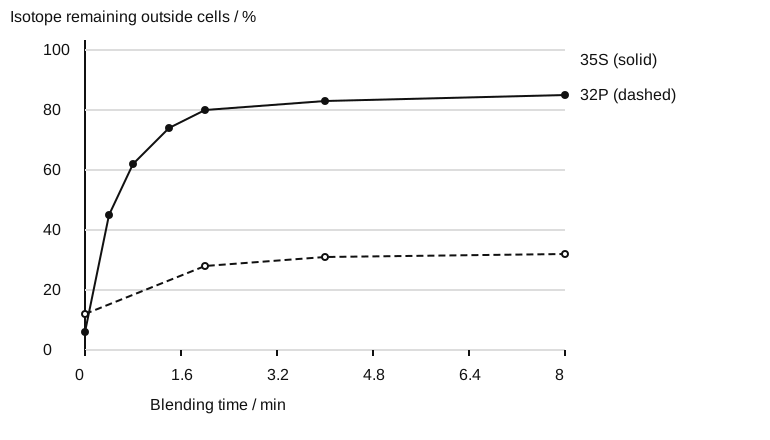
A teaching dataset models bacteriophage infection of bacteria. One phage preparation is labelled with phosphorus-32; another is labelled with sulfur-35. After attachment and injection, separate mixtures are blended for different times. The graph records labelled material recovered outside bacterial cells after separation.
 Powiększ
Polecenie
Explain how the results support DNA as the hereditary material of these phages.
Korepetytor AI
Nie wiesz, jak ruszyć? Korepetytor zna to zadanie i poprowadzi Cię krok po kroku, bez gotowca.
3 rozmowy · bez karty · Zaloguj się
Sprawdź się
Odpowiedz i oceń, jak poszło. Klucz odsłoń dopiero, gdy masz swoją odpowiedź.
Jak poszło Ci z tym zadaniem?
Wybierz ocenę: zapamięta ją ta przeglądarka, a z darmowym kontem zobaczysz ją na każdym urządzeniu.
Pokaż rozwiązanieUkryj rozwiązanieKlucz i punktacja
Odpowiedź z klucza
DNA contains phosphorus, whereas sulfur occurs in some protein amino acids. ✔
Most phosphorus-32 is not recovered outside cells, indicating that the labelled material entered bacteria. ✔
Since phosphorus-32 traces DNA, this supports DNA carrying the inherited information into the host. ✔
Most sulfur-35 remains outside, indicating that the labelled protein coat did not enter bacteria. ✔
Since sulfur-35 traces protein, this argues against the coat protein being the material that conveys hereditary information into the host. ✔
Schemat punktowania
Award any 3 distinct points, maximum 3. Tracer-entry statements must identify the isotope or clearly refer to its labelled material.