Zadanie 1j, Paper 2, listopad 2022, Biologia IB SL
Wzorowane na: Biology SL Paper 2, November 2022, pytanie 1(j). Treść, dane i kontekst są zmienione; sprawdzane umiejętności, format i punktacja jak w oryginale.
Darmowe konto pozwoli wrócić do niego później.
Zadanie
Wspólne informacje do wiązki zadań
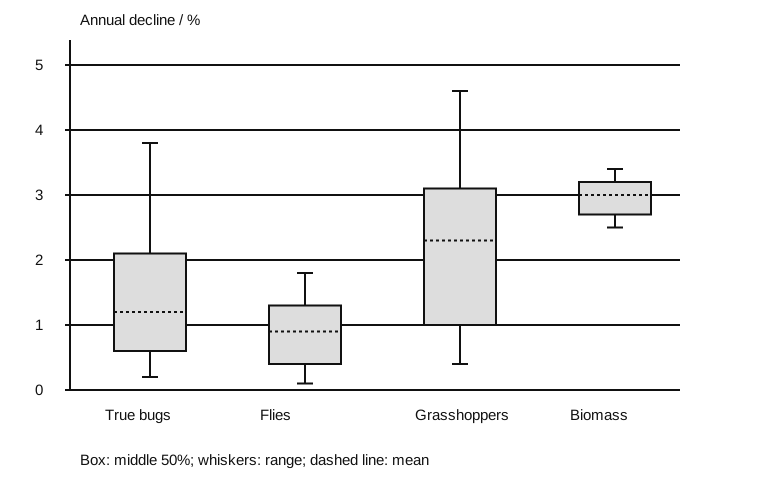
The following results are constructed for a hypothetical investigation of insect decline and bumblebee nutrition. The first chart summarizes annual reductions in species numbers for three insect groups and in total insect biomass.
 Powiększ
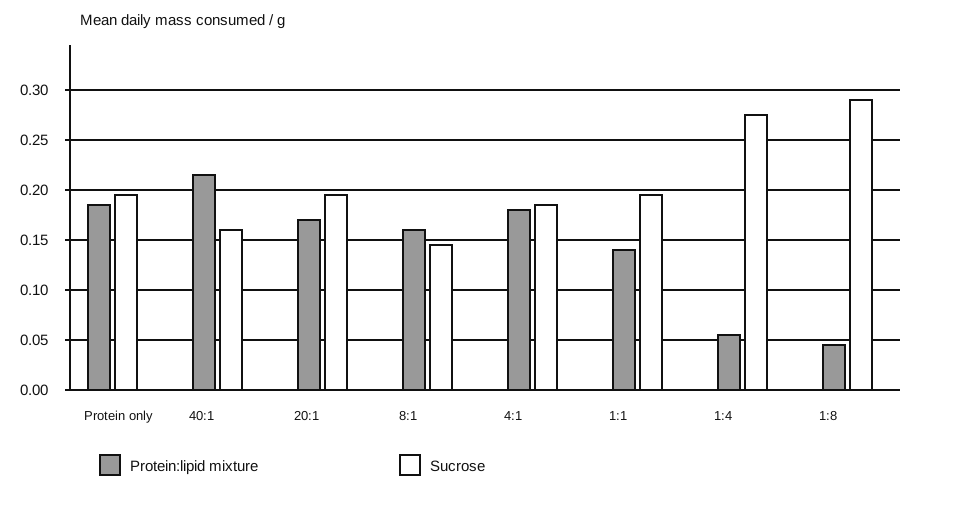
In a second study, adult red-tailed bumblebees receive one of eight protein:lipid mixtures by mass, together with freely available sucrose. The amounts of both foods consumed are measured. The model explores how loss of preferred flowering habitats could change food composition.
 Powiększ
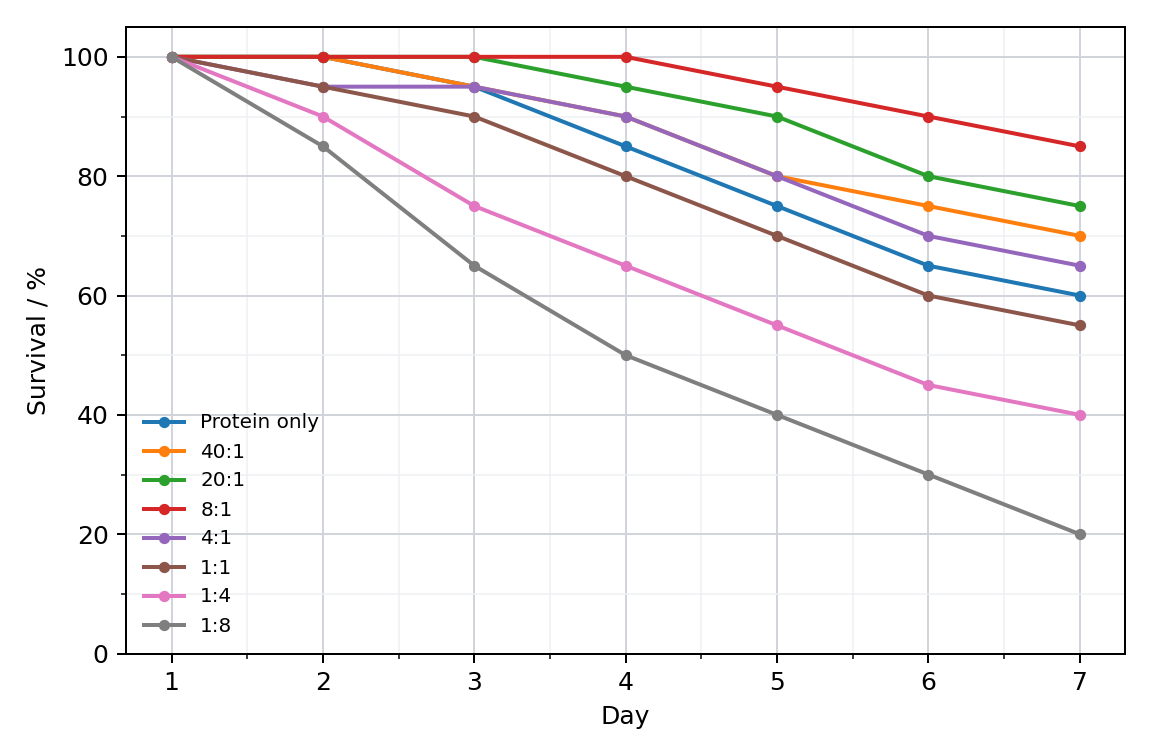
Twenty bees are assigned to each diet. The final graph shows survival during seven days; these are model observations, not published measurements of this species.
 Powiększ
Polecenie
Discuss whether these studies show that habitat loss can affect global bumblebee numbers.
Korepetytor AI
Nie wiesz, jak ruszyć? Korepetytor zna to zadanie i poprowadzi Cię krok po kroku, bez gotowca.
3 rozmowy · bez karty · Zaloguj się
Sprawdź się
Odpowiedz i oceń, jak poszło. Klucz odsłoń dopiero, gdy masz swoją odpowiedź.
Jak poszło Ci z tym zadaniem?
Wybierz ocenę: zapamięta ją ta przeglądarka, a z darmowym kontem zobaczysz ją na każdym urządzeniu.
Pokaż rozwiązanieUkryj rozwiązanieKlucz i punktacja
Odpowiedź z klucza
Loss of habitat can remove preferred flowers or food sources. ✔
Bees may then use alternative foods. ✔
Different nutrient ratios can reduce survival, as in the model. ✔
No group receives an unmodified natural diet as a control. ✔
Artificial mixtures or laboratory conditions may not represent natural pollen and habitats OR the sample is small OR one species does not establish a global effect. ✔
Schemat punktowania
Any2 distinct relevant points,maximum2; source scheme does not require one point on each side. Avoid claiming that artificial observations prove a worldwide causal effect.