Zadanie 2a
Wzorowane na: Chemistry SL Paper 1B, May 2026, TZ3, pytanie 2(a). Treść, dane i kontekst są zmienione; sprawdzane umiejętności, format i punktacja jak w oryginale.
Darmowe konto pozwoli wrócić do niego później.
Informacja do zadań 2a-2d.
A group of students analysed freshly squeezed pink grapefruit juice. They determined the content of the red pigment lycopene, a carotenoid, by colorimetry, and the content of ascorbic acid, C6H8O6, by titration.
Polecenie
The structure of lycopene is shown.
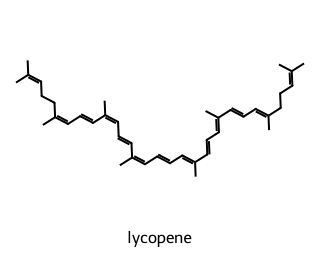
To separate the lycopene, the filtered juice was shaken in a separating funnel with heptane, C7H16, and the mixture was left to form two immiscible layers, which were run into separate flasks. Predict which layer will contain the lycopene and explain your answer in terms of the intermolecular forces involved.
Sprawdź rozwiązanieUkryj rozwiązanieKlucz CKE i punktacja
Odpowiedź z klucza
heptane layer AND lycopene «a hydrocarbon» and heptane attract each other by London / dispersion forces alone «so they mix» ✔
OR
heptane layer AND lycopene cannot form hydrogen bonds «with the water in the juice» ✔
Schemat punktowania
[1] for the heptane layer (accept 'upper layer' or C7H16) together with a reason in terms of intermolecular forces; the layer alone does not score. Accept 'lycopene is non-polar' only if linked to London forces or to the lack of hydrogen bonding.
Komentarz
Lycopene is a hydrocarbon, so it can attract the water of the juice only through weak forces and cannot compete with the hydrogen bonds between water molecules.