Zadanie 1k, Paper 2, maj 2024, TZ1, Biologia IB HL
Wzorowane na: Biology HL Paper 2, May 2024, TZ1, pytanie 1(k). Treść, dane i kontekst są zmienione; sprawdzane umiejętności, format i punktacja jak w oryginale.
Darmowe konto pozwoli wrócić do niego później.
Zadanie
Wspólne informacje do wiązki zadań
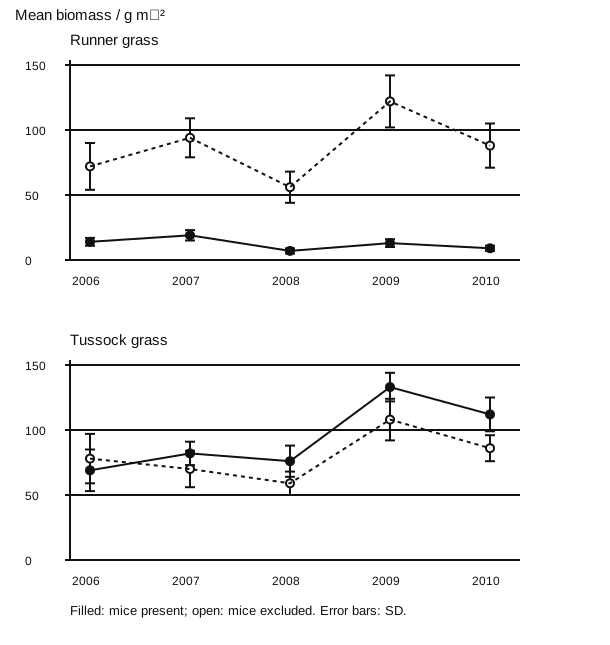
A hypothetical grassland investigation examines how herbivorous field mice affect runner grasses and tall tussock grasses. The mice normally obtain food from one of the grass types. Replicated plots were monitored with mice present or excluded. The first dataset gives mean biomass from 2006 to 2010. Error bars throughout show standard deviations.
 Powiększ
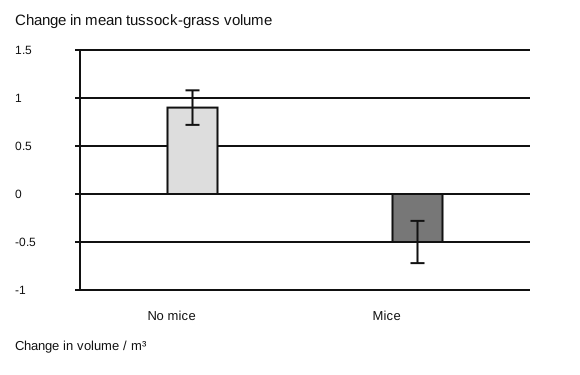
A later experiment measured change in the volume occupied by one tussock-grass species over two growing seasons.
 Powiększ
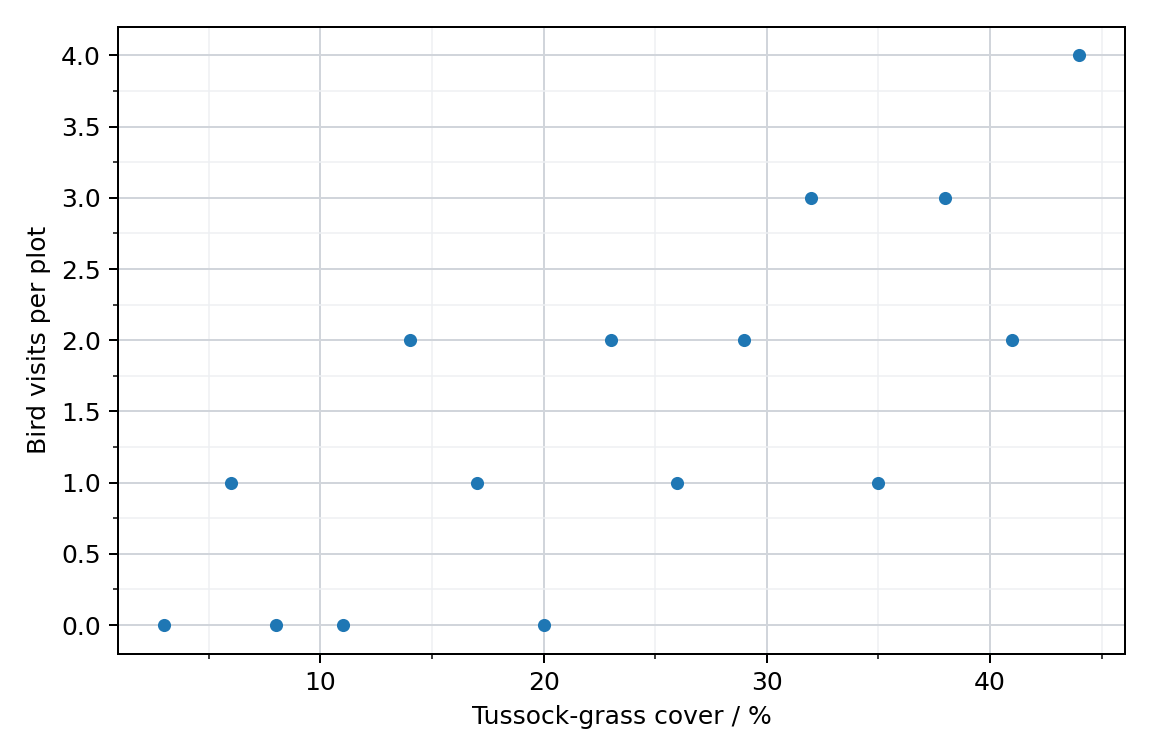
Predatory birds that hunt small rodents from vegetation visited the later study but were absent during the first experiment. Fifteen plots were surveyed for vegetation cover and bird visits.
 Powiększ
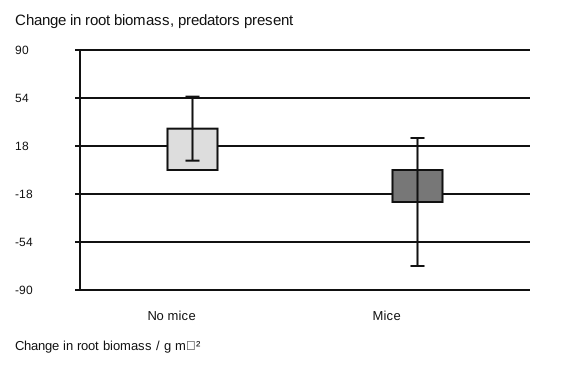
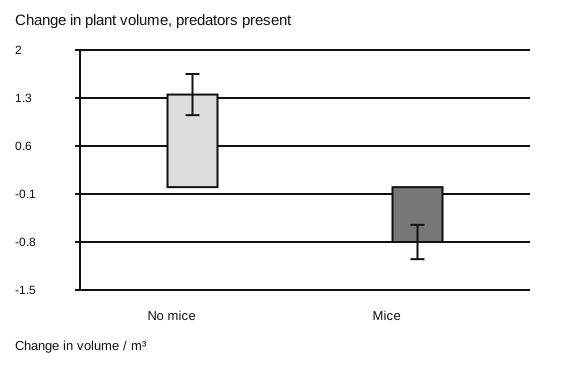
In another month-long experiment, predators had access to all plots. Researchers measured changes in tussock-grass root biomass and plant volume with and without mice.
 Powiększ
 Powiększ
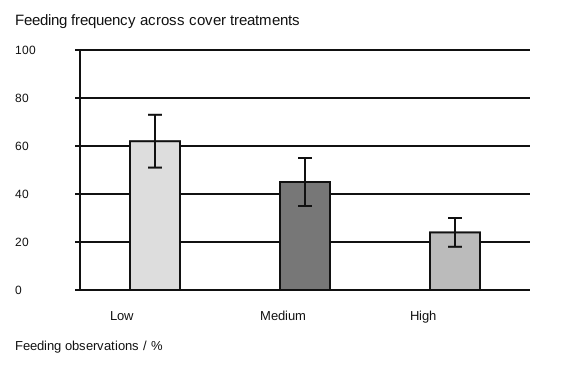
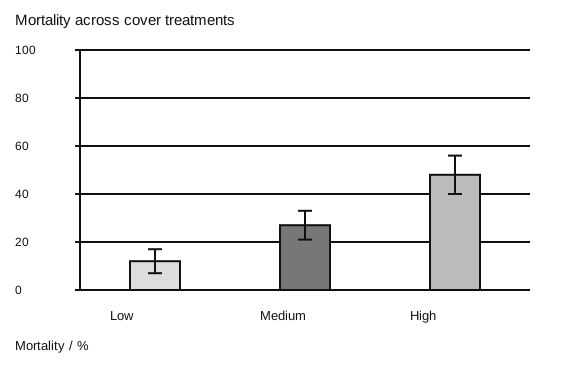
Finally, plots contained three levels of tussock-grass cover as well as the plants normally eaten by the mice. Birds could visit freely. Feeding frequency and mouse mortality were recorded over three weeks.
 Powiększ
 Powiększ
Polecenie
Discuss the claim that these mice can change their habitat in ways that improve their survival, using the datasets.
Korepetytor AI
Nie wiesz, jak ruszyć? Korepetytor zna to zadanie i poprowadzi Cię krok po kroku, bez gotowca.
3 rozmowy · bez karty · Zaloguj się
Sprawdź się
Odpowiedz i oceń, jak poszło. Klucz odsłoń dopiero, gdy masz swoją odpowiedź.
Jak poszło Ci z tym zadaniem?
Wybierz ocenę: zapamięta ją ta przeglądarka, a z darmowym kontem zobaczysz ją na każdym urządzeniu.
Pokaż rozwiązanieUkryj rozwiązanieKlucz i punktacja
Odpowiedź z klucza
The findings support the conclusion OR show habitat modification with a relevant example. ✔
Mice are associated with a reduction in tussock-grass volume or cover. ✔
Mice are associated with reduced tussock root biomass. ✔
The mice reduce tussock vegetation even though the first study suggests that this grass is not their normal food. ✔
Lower tussock cover is associated with lower mortality. ✔
Lower cover attracts fewer visits by predatory birds. ✔
Reduced predator activity could account for improved survival. ✔
Lower cover is associated with more frequent feeding. ✔
The datasets are consistent with the claim but do not establish deliberate intent; other differences between experiments may contribute. ✔
Schemat punktowania
Award any 4 distinct supported points; maximum 4. Do not credit a claim that mice merely adapt to an unchanged habitat as evidence of habitat modification. Do not double-credit synonymous mortality/predation statements.