Zadanie 1f, Paper 2, listopad 2022, Biologia IB HL
Wzorowane na: Biology HL Paper 2, November 2022, pytanie 1(f). Treść, dane i kontekst są zmienione; sprawdzane umiejętności, format i punktacja jak w oryginale.
Darmowe konto pozwoli wrócić do niego później.
Zadanie
Wspólne informacje do wiązki zadań
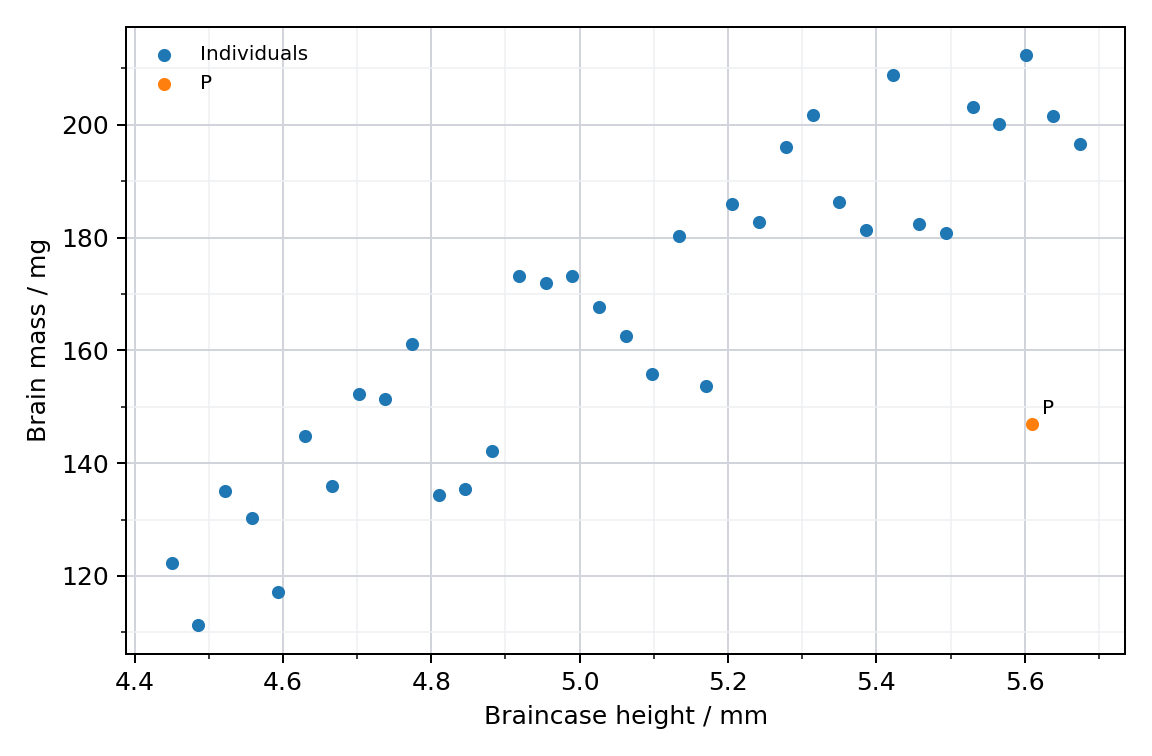
All results below are constructed data for a hypothetical population of small, non-hibernating pygmy shrews. The animals remain active in winter and eat invertebrates. Braincase height (BCH), measured from a skull scan under anaesthesia, is investigated as an indicator of brain size. The first sample compares BCH with measured brain mass; P identifies one animal.
 Powiększ
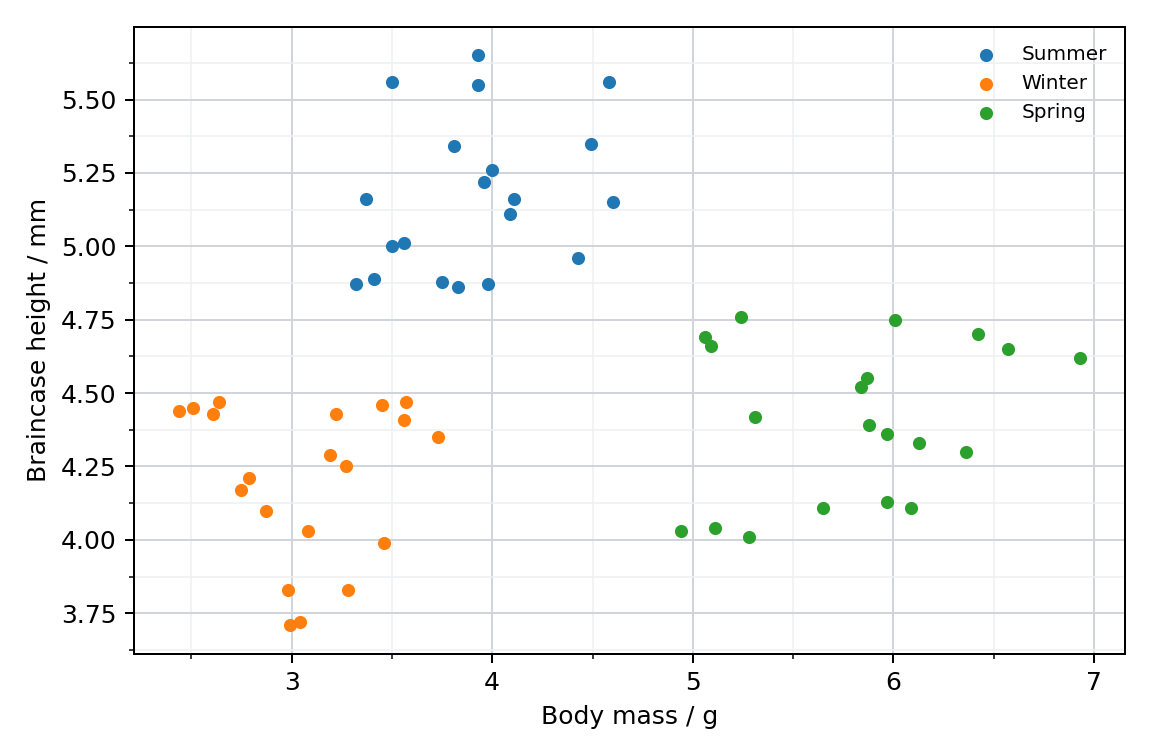
Seasonal samples compare BCH with body mass.
 Powiększ
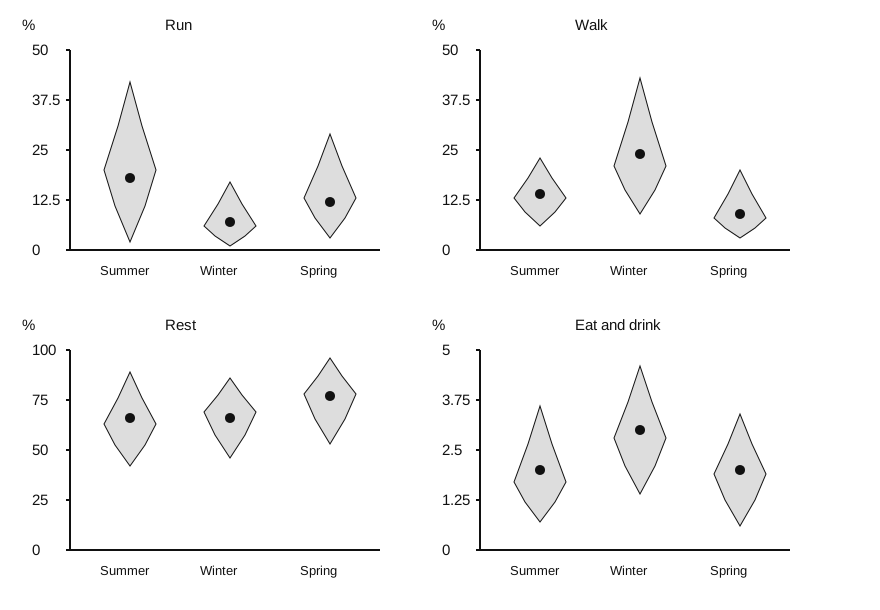
Activity is recorded as a percentage of observation time. Shaded envelopes show distributions and dots show means; each panel has its own vertical scale.
 Powiększ
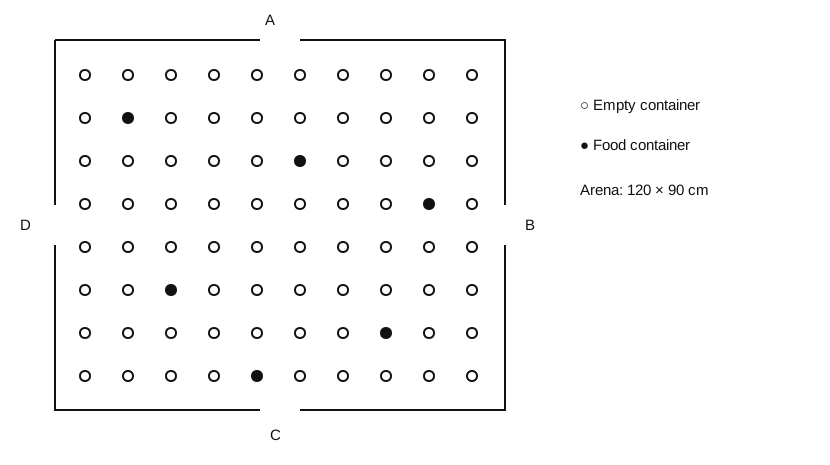
In another experiment, shrews enter a rectangular arena containing food and empty containers. Each is tested after a two-hour interval without food.
 Powiększ
The travelled distance is divided by the direct distance from the entrance to the first food container reached. Each seasonal group contains ten animals, each completing ten trials. Error bars show standard errors.
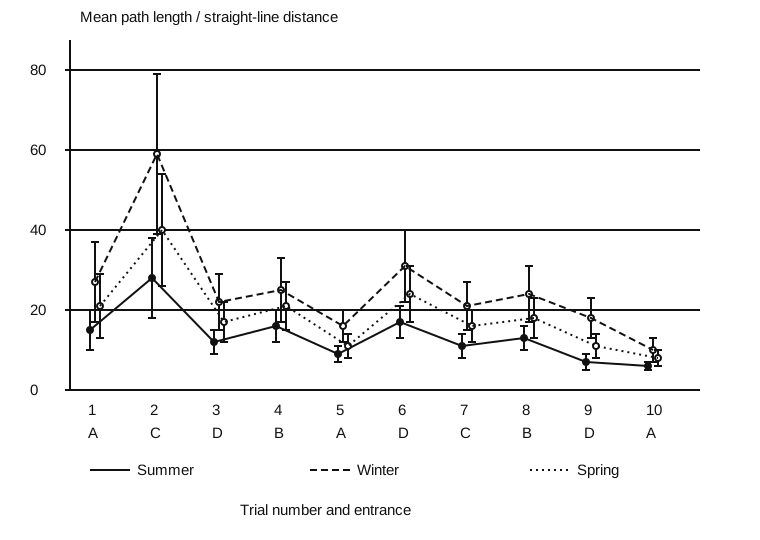 Powiększ
Polecenie
Suggest a reason for the seasonal difference in BCH between summer and winter.
Korepetytor AI
Nie wiesz, jak ruszyć? Korepetytor zna to zadanie i poprowadzi Cię krok po kroku, bez gotowca.
3 rozmowy · bez karty · Zaloguj się
Sprawdź się
Odpowiedz i oceń, jak poszło. Klucz odsłoń dopiero, gdy masz swoją odpowiedź.
Jak poszło Ci z tym zadaniem?
Wybierz ocenę: zapamięta ją ta przeglądarka, a z darmowym kontem zobaczysz ją na każdym urządzeniu.
Pokaż rozwiązanieUkryj rozwiązanieKlucz i punktacja
Odpowiedź z klucza
Maintaining a large brain requires considerable energy OR winter energy requirements for thermoregulation or food searching compete with brain maintenance OR food energy is less available in winter OR seasonal regrowth can occur between winter and summer. ✔
Schemat punktowania
Any 1. Do not accept hibernation, reduced body temperature or a generalized reduction in winter metabolic rate; the context specifies active non-hibernators. Body-mass change alone is insufficient.