Zadanie 1f, Paper 2, maj 2023, TZ2, Biologia IB SL
Wzorowane na: Biology SL Paper 2, May 2023, TZ2, pytanie 1(f). Treść, dane i kontekst są zmienione; sprawdzane umiejętności, format i punktacja jak w oryginale.
Darmowe konto pozwoli wrócić do niego później.
Zadanie
Wspólne informacje do wiązki zadań
These constructed datasets model an observational investigation of gut bacteria. Four recurring community types, called enterotypes W, X, Y and Z, differ in their composition. Taxa A–E are coded bacterial genera; the remaining genera are grouped as other taxa. In this hypothetical population, enterotype Y is associated with more intestinal inflammatory disease.
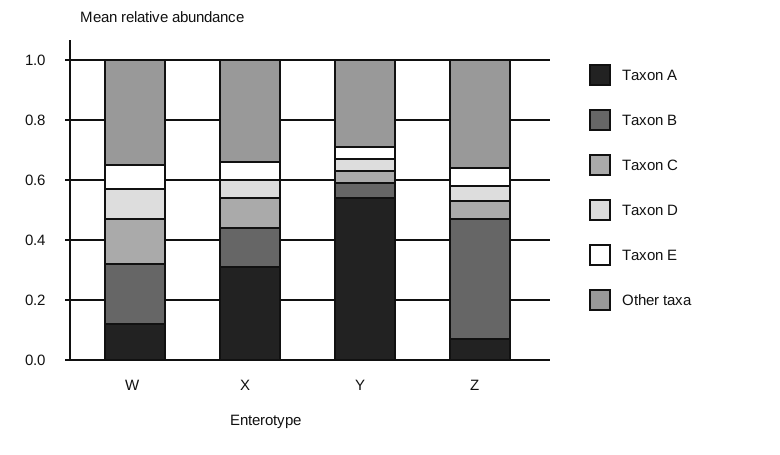 Powiększ
Forty faecal samples are frozen immediately after collection. Bacterial cells are later counted and the enterotype determined.
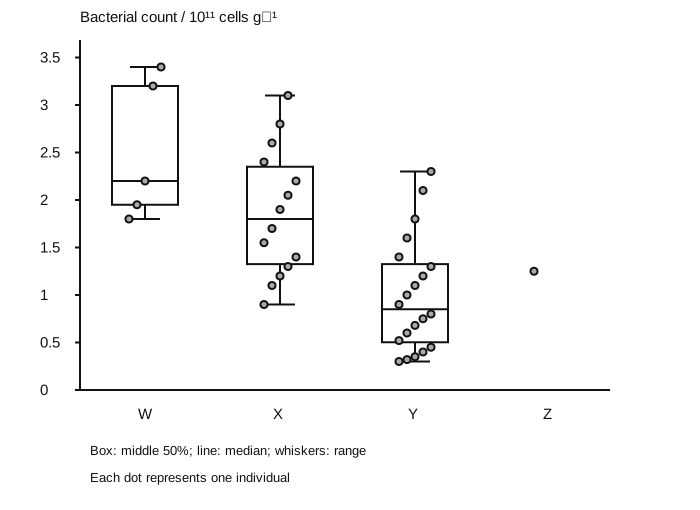 Powiększ
A separate observational sample of 860 adults provides enterotypes and body mass index (BMI). The stacked curves show how each enterotype’s prevalence varies with BMI; the thickness of each band gives its prevalence.
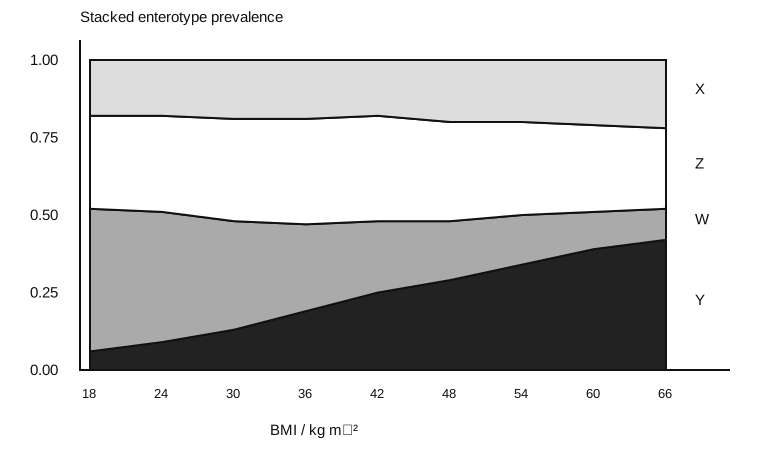 Powiększ
The same adults are grouped by BMI and use of a hypothetical lipid-lowering treatment L. The pie charts summarize prevalence.
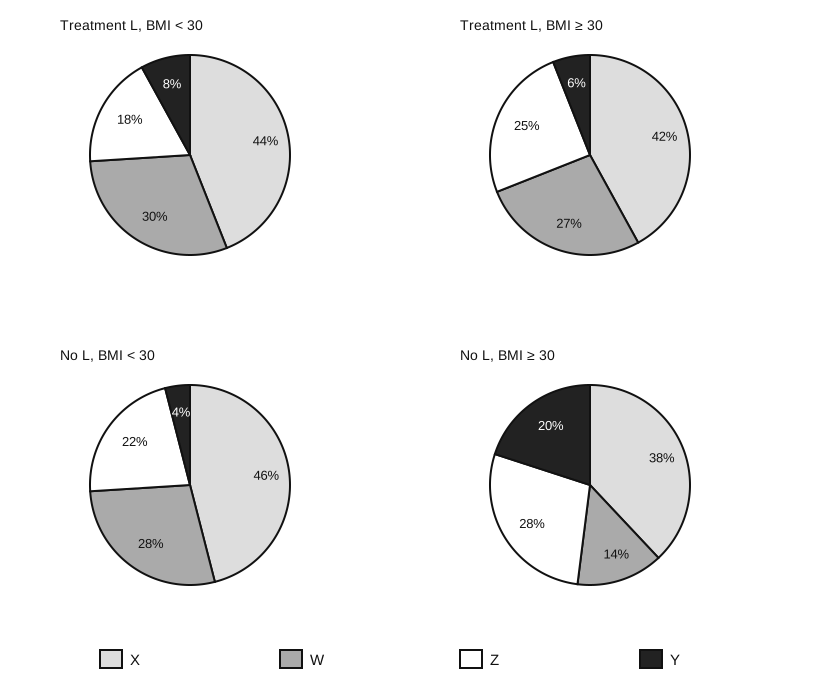 Powiększ
Polecenie
Evaluate the evidence in the stacked graph for the hypothesis that W causes low BMI.
Korepetytor AI
Nie wiesz, jak ruszyć? Korepetytor zna to zadanie i poprowadzi Cię krok po kroku, bez gotowca.
3 rozmowy · bez karty · Zaloguj się
Sprawdź się
Odpowiedz i oceń, jak poszło. Klucz odsłoń dopiero, gdy masz swoją odpowiedź.
Jak poszło Ci z tym zadaniem?
Wybierz ocenę: zapamięta ją ta przeglądarka, a z darmowym kontem zobaczysz ją na każdym urządzeniu.
Pokaż rozwiązanieUkryj rozwiązanieKlucz i punktacja
Odpowiedź z klucza
W is more prevalent at lower BMI. ✔
The prevalence difference across BMI is large. ✔
Correlation does not establish that W causes lower BMI. ✔
Low BMI could instead influence the prevalence of W. ✔
Schemat punktowania
Award any 2 of the listed points; maximum 2 marks. A statement that W is much more common at low BMI can earn the first two points.