Zadanie 1i, Paper 2, maj 2024, TZ1, Biologia IB SL
Wzorowane na: Biology SL Paper 2, May 2024, TZ1, pytanie 1(i). Treść, dane i kontekst są zmienione; sprawdzane umiejętności, format i punktacja jak w oryginale.
Darmowe konto pozwoli wrócić do niego później.
Zadanie
Wspólne informacje do wiązki zadań
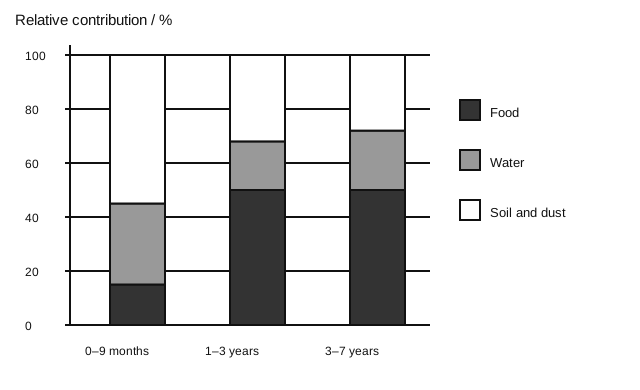
All values and policy dates below are constructed for a data-analysis exercise. Lead exposure can affect development and physiology. Blood lead concentration is used here as an exposure indicator. The first chart estimates contributions from food, water and soil/dust in three age groups.
 Powiększ
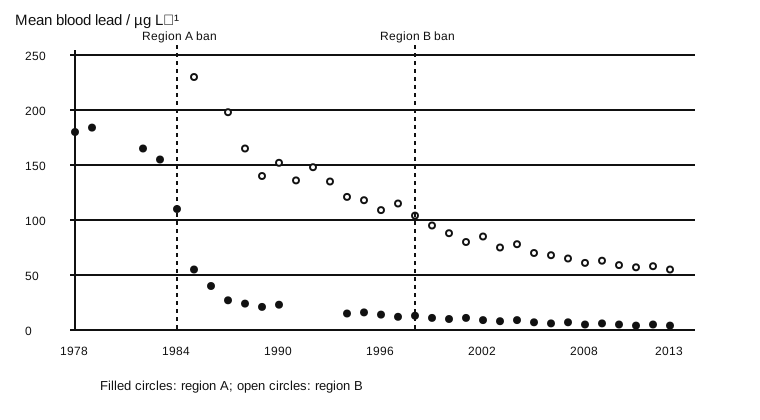
The second dataset follows mean blood lead concentrations among children in two hypothetical regions. Region A removed lead additives from vehicle fuel in 1984; region B did so in 1998.
 Powiększ
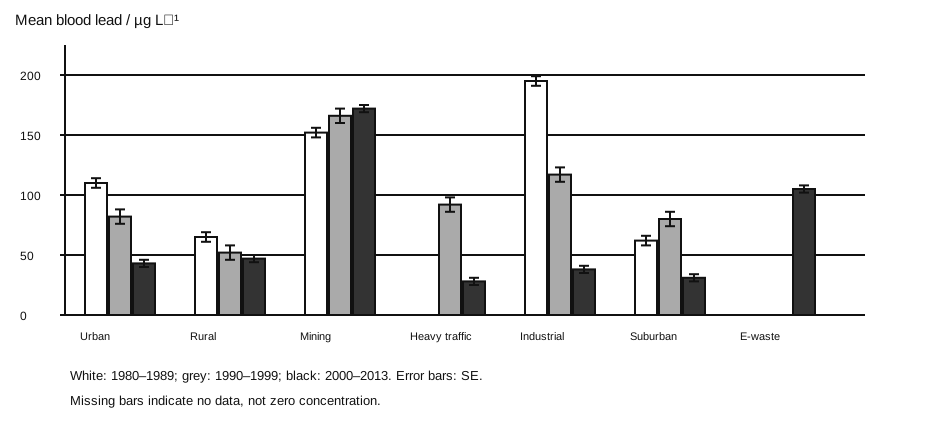
The last chart compares residential environments in region B across three periods. E-waste includes discarded electrical and electronic equipment.
 Powiększ
Polecenie
Discuss how disposal of e-waste could affect children’s blood lead concentrations, using the datasets.
Korepetytor AI
Nie wiesz, jak ruszyć? Korepetytor zna to zadanie i poprowadzi Cię krok po kroku, bez gotowca.
3 rozmowy · bez karty · Zaloguj się
Sprawdź się
Odpowiedz i oceń, jak poszło. Klucz odsłoń dopiero, gdy masz swoją odpowiedź.
Jak poszło Ci z tym zadaniem?
Wybierz ocenę: zapamięta ją ta przeglądarka, a z darmowym kontem zobaczysz ją na każdym urządzeniu.
Pokaż rozwiązanieUkryj rozwiązanieKlucz i punktacja
Odpowiedź z klucza
E-waste could increase lead exposure and hence blood lead concentration. ✔
Lead from discarded equipment could enter the food, water or soil/dust pathways shown. ✔
The latest e-waste-site mean exceeds every other environment except mining. ✔
More discarded equipment could increase exposure if release pathways remain uncontrolled. ✔
An association between residence and blood lead does not establish that e-waste is the causal source. ✔
Schemat punktowania
Award any 3 distinct valid points; maximum 3 marks.