Zadanie 1f, Paper 2, maj 2024, TZ2, Biologia IB HL
Wzorowane na: Biology HL Paper 2, May 2024, TZ2, pytanie 1(f). Treść, dane i kontekst są zmienione; sprawdzane umiejętności, format i punktacja jak w oryginale.
Darmowe konto pozwoli wrócić do niego później.
Zadanie
Wspólne informacje do wiązki zadań
A constructed long-term study follows three hypothetical species of large, long-lived oceanic seabirds, A, B and C. They use wind while searching for prey and breed on the same island. They can be killed accidentally in fishing gear, and changes to food webs or climate may affect them.
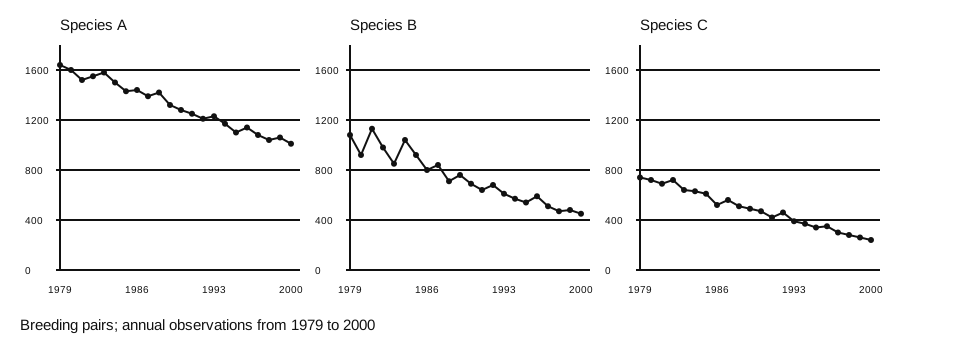
The first dataset gives annual breeding-pair counts for 22 years.
 Powiększ
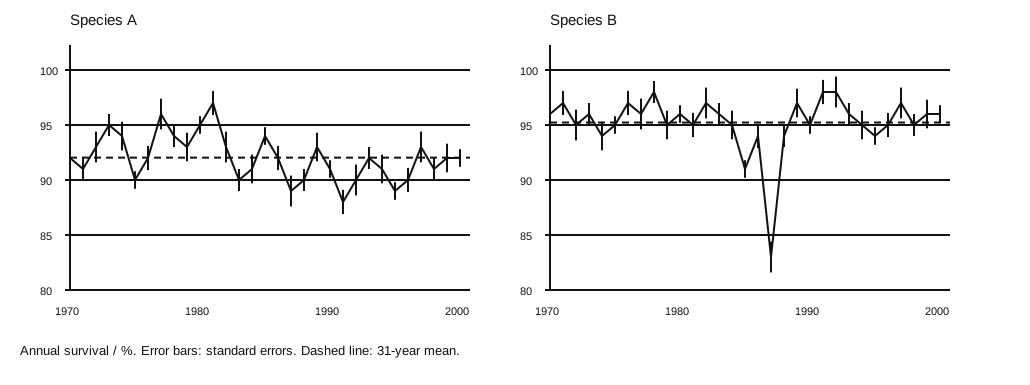
The next dataset gives annual survival for species A and B over 31 years. Annual survival is the percentage of adults alive at the start of a year that remain alive at its end; it excludes recruitment.
 Powiększ
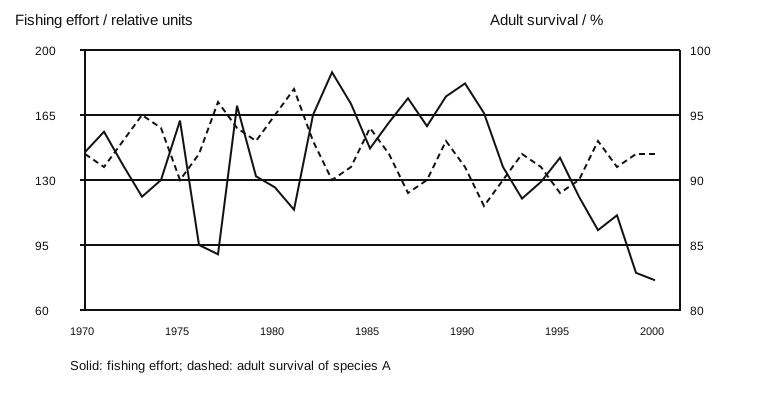
Fishing effort indicates the intensity of fishing activity. The graph pairs it with survival in species A.
 Powiększ
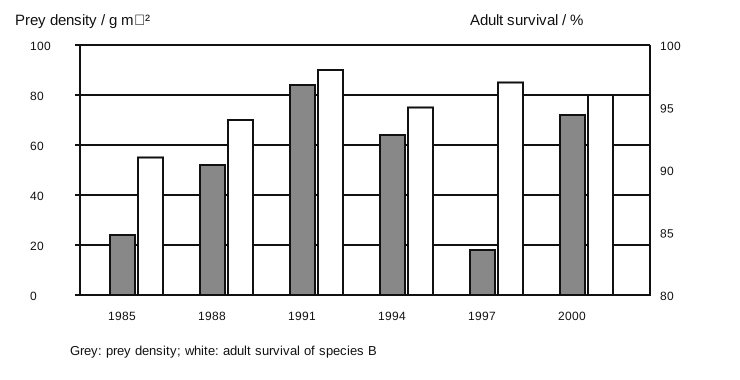
Small crustaceans are important prey directly or indirectly for these birds. The final graph compares prey density and species B survival at six survey dates.
 Powiększ
A further study of species C reports these effects.
| Variable | Total eggs laid in the colony | Percentage of chicks surviving |
|---|---|---|
| Wind conditions depart from the optimum | No significant effect | Negative effect |
| Number of breeding pairs increases | Positive effect | No significant effect |
Polecenie
Suggest two explanations for the reported effects of wind conditions, and two for the reported effects of breeding-pair numbers, on eggs and chick survival.
Korepetytor AI
Nie wiesz, jak ruszyć? Korepetytor zna to zadanie i poprowadzi Cię krok po kroku, bez gotowca.
3 rozmowy · bez karty · Zaloguj się
Sprawdź się
Odpowiedz i oceń, jak poszło. Klucz odsłoń dopiero, gdy masz swoją odpowiedź.
Jak poszło Ci z tym zadaniem?
Wybierz ocenę: zapamięta ją ta przeglądarka, a z darmowym kontem zobaczysz ją na każdym urządzeniu.
Pokaż rozwiązanieUkryj rozwiązanieKlucz i punktacja
Odpowiedź z klucza
Wind: adults may still have enough resources to produce eggs despite altered wind, so egg output is unchanged. ✔
Wind: poorer foraging or longer journeys can reduce food delivered to chicks. ✔
Wind: adult losses in fishing gear can leave chicks without provisioning. ✔
Wind: altered winds may expose chicks to predators. ✔
Wind: altered winds may damage nests or increase heat loss. ✔
Breeding pairs: more reproducing pairs can produce a larger total number of eggs. ✔
Breeding pairs: adequate food can keep the percentage of chicks surviving similar despite more pairs. ✔
Breeding pairs: adequate space can prevent crowding from reducing chick survival. ✔
Breeding pairs: healthy eggs can sustain a similar hatchling survival percentage. ✔
Breeding pairs: low predation or otherwise similar mortality conditions can keep proportional chick survival stable. ✔
Schemat punktowania
Award any 2 plausible explanations for wind and any 2 for breeding-pair number, maximum 4. Each must name the affected life-cycle outcome. Repeating the table without an explanation earns no credit.