Zadanie 2b, Paper 2, listopad 2025, TZ1, Chemia IB SL
Wzorowane na: Chemistry SL Paper 2, November 2025, TZ1, pytanie 2(b). Treść, dane i kontekst są zmienione; sprawdzane umiejętności, format i punktacja jak w oryginale.
Darmowe konto pozwoli wrócić do niego później.
Zadanie
Wspólne informacje do wiązki zadań
Many esters are still known by trivial names. Propyl ethanoate, CH3COOCH2CH2CH3, which has the odour of pears, is manufactured from propan-1-ol and ethanoic acid in the presence of an acid catalyst.
CH3CH2CH2OH(l) + CH3COOH(l) ⇌ CH3COOCH2CH2CH3(l) + H2O(l)
Both reactants can be synthesized from alkanes: propan-1-ol from propane via 1-bromopropane, and ethanoic acid from ethane via bromoethane and ethanol. The overall equation for the synthesis of the ester from the two alkanes is
Polecenie
(i) Oil of vitriol, spirit of hartshorn and wood alcohol are old trivial names still occasionally used for chemical substances, and names like these can be a source of confusion in international scientific communication. Outline how the modern system of naming compounds avoids this problem.
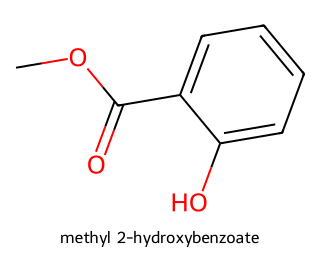
(ii) Shown below is the molecule of oil of wintergreen (methyl 2-hydroxybenzoate).
 Powiększ
Besides its ester group, two further functional groups are present in this molecule. State their names.
(iii) Propyl ethanoate has the molecular formula C5H10O2. Deduce the structure and name of one of its functional group isomers.
(iv) Concentrated sulfuric acid, H2SO4, is used as the catalyst in the manufacture of propyl ethanoate. Explain how the catalyst affects the reaction.
(v) The conversion of propane into 1-bromopropane,
C3H8(g) + Br2(g) → CH3CH2CH2Br(g) + HBr(g)
begins with an initiation step:
Br2 → 2 Br ∙
State the condition needed for this initiation step to take place.
(vi) Deduce two propagation steps and one termination step for this reaction.
Korepetytor AI
Nie wiesz, jak ruszyć? Korepetytor zna to zadanie i poprowadzi Cię krok po kroku, bez gotowca.
3 rozmowy · bez karty · Zaloguj się
Sprawdź się
Odpowiedz i oceń, jak poszło. Klucz odsłoń dopiero, gdy masz swoją odpowiedź.
Zanim porównasz z kluczem
Jak poszło Ci z tym zadaniem?
Zaloguj się, żeby zapisać ocenę i wrócić do zadania później.
Pokaż rozwiązanieUkryj rozwiązanieKlucz i punktacja
Odpowiedź z klucza
(i) «IUPAC» systematic nomenclature / a single set of naming rules agreed internationally «by IUPAC» ✔
the name is derived from the structure «longest chain, functional group, positions of substituents» so that one name corresponds to exactly one structure ✔
(ii) hydroxyl «group» ✔
phenyl «ring» ✔
(iii) structure of a carboxylic acid with the formula C5H10O2, e.g. CH3CH2CH2CH2COOH drawn as a full or skeletal structure ✔
pentanoic acid ✔
(iv) increases the rate of reaction «and is not used up» ✔
provides an alternative pathway with a lower activation energy / a greater proportion of collisions have energy greater than the activation energy ✔
(v) ultraviolet light / UV «radiation» ✔
(vi) propagation: Br ∙ + CH3CH2CH3 → HBr + CH3CH2CH2 ∙ ✔
AND CH3CH2CH2 ∙ + Br2 → CH3CH2CH2Br + Br ∙ ✔
termination «any one of»: Br ∙ + Br ∙ → Br2 / CH3CH2CH2 ∙ + Br ∙ → CH3CH2CH2Br / CH3CH2CH2 ∙ + CH3CH2CH2 ∙ → CH3CH2CH2CH2CH2CH3 ✔
Schemat punktowania
(i) M1: IUPAC / systematic international nomenclature; M2: names follow rules based on the structure of the molecule. (ii) [1] for each group; do not accept phenol, benzene ring or aromatic ring for phenyl, do not accept alcohol for hydroxyl, do not accept carbonyl (it is part of the ester). (iii) M1: structure of any non-ester isomer of C5H10O2 (a molecular formula alone is not accepted); M2: a name consistent with the structure drawn. Accept 2-methylbutanoic acid, 3-methylbutanoic acid, 2,2-dimethylpropanoic acid or any other correct non-ester isomer. (iv) M1: increases the rate; M2: lower activation energy through an alternative pathway, or more particles with energy at least equal to the activation energy. (v) [1] for UV light; accept sunlight; do not accept light alone or heat. (vi) M1: first propagation step (a bromine radical abstracts a hydrogen from the terminal carbon of propane, giving HBr and a 1-propyl radical); M2: second propagation step (the 1-propyl radical reacts with Br2, giving 1-bromopropane and regenerating a bromine radical); M3: any correct termination step (two radicals combining to give one product with no radical left over). The hydrogen abstracted in M1 must come from the terminal carbon, otherwise 2-bromopropane forms instead of the 1-bromopropane shown.
Komentarz. The radical must abstract a hydrogen from the terminal carbon of propane to give the 1-bromopropane shown in the equation; abstraction from the middle carbon would give 2-bromopropane instead.